What Is a Softshell Jacket? Rain, Washing and How It Compares
What a softshell jacket is, whether it keeps out rain (water-repellent is not waterproof), how to wash it, and softshell vs winter jacket vs padded gilet.
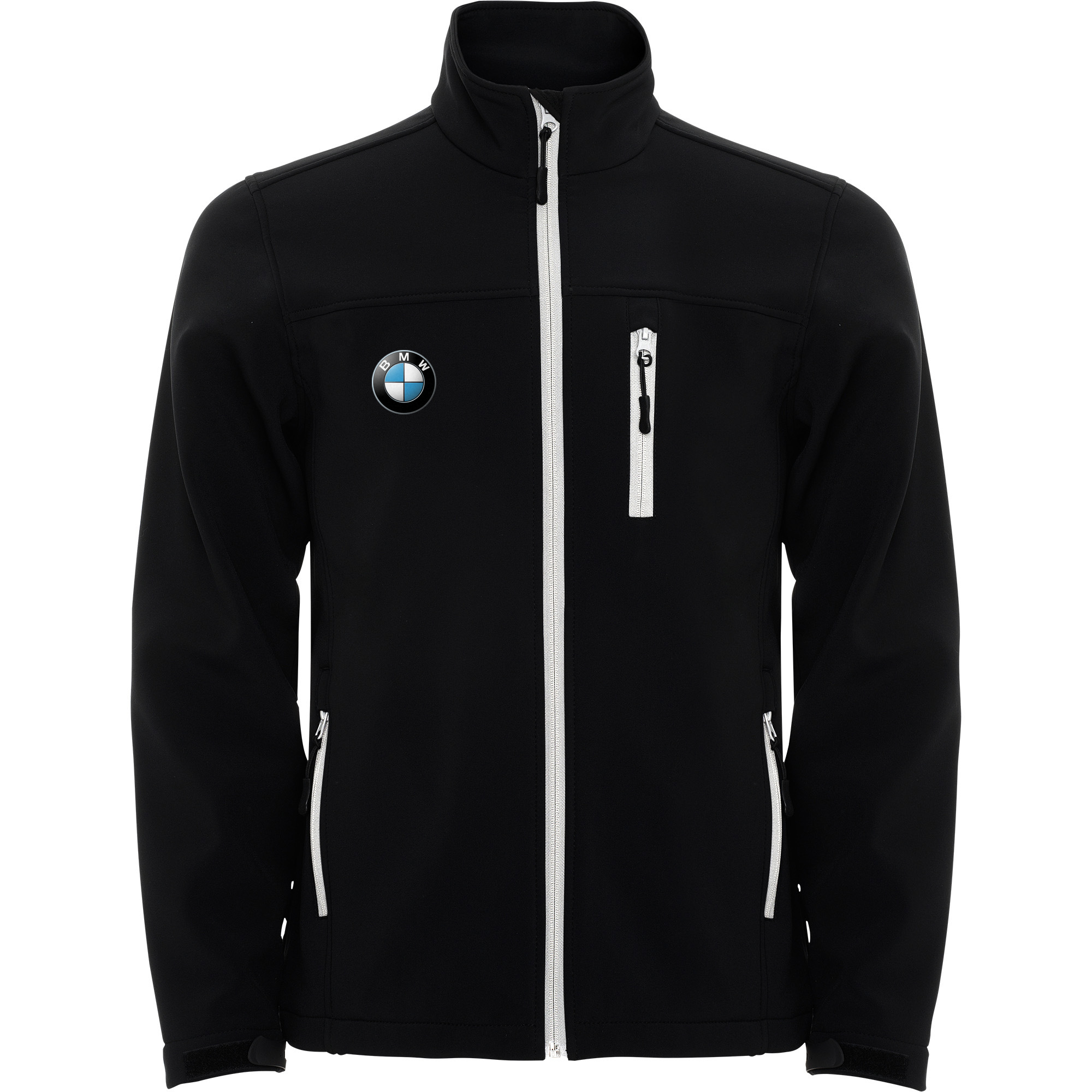
A softshell jacket is a jacket made from a soft, flexible outer fabric, usually polyester or nylon and often lined with fleece, that resists wind and sheds light rain. Most softshells are water-repellent rather than waterproof: they cope with drizzle or a short shower, not with hours of heavy rain.
This guide explains what softshell is, what "water-repellent" and "waterproof" really mean, how to wash a softshell without harming it, and how it compares with a padded winter jacket and a gilet. As examples we use the black jackets in our sportswear range for BMW, Audi, Mercedes-Benz and Volkswagen fans.
What is a softshell jacket?
The name sets it apart from the hardshell, the stiffer waterproof shell jacket with sealed seams. A softshell gives up some weather protection in exchange for comfort: the fabric is softer and more flexible, it moves with you, and it can be worn on its own in mild weather or as a mid layer under a rain jacket. The inside is often lined with fleece.
Our softshell jackets are a two-layer softshell: 92% polyester and 8% elastane, with a microfleece lining, 300 g/m². They are water-repellent and wind-resistant and have a white front zip with a chin guard, two side pockets and a chest pocket with white zips, and adjusters inside the hem. The base garment is the Roly ANTARTIDA, in sizes S to 2XL. The BMW M Power softshell jacket has the M Power lettering large on the back, the Mercedes-AMG softshell jacket the AMG lettering and the Volkswagen softshell jacket the Volkswagen wordmark.
Is a softshell jacket waterproof?
Usually not, and the difference matters when you choose a jacket.
| Term | What it means | What to expect |
|---|---|---|
| Water-repellent | The surface is treated, usually with a DWR (durable water repellent) finish, so water beads up and rolls off. | Drizzle, a light shower or light snow are fine. In steady rain water can get through, especially at seams and zips. |
| Waterproof | A membrane blocks the rain, and the seams and zips are sealed or taped. Fabrics are rated by hydrostatic head, in millimetres. | Keeps you dry in heavy, sustained rain. |
Outdoor clothing makers describe softshells in the same terms: typically water-repellent or only lightly water-resistant, and without fully sealed seams, which keeps them more breathable and flexible than a hardshell. A DWR finish also wears off over time, which is why softshells are re-proofed now and then.
Our softshell, winter jacket and gilet are all water-repellent and wind-resistant. They are made for wind, cold and the odd shower on the way to the car, not for hours in a downpour; for that you need a fully waterproof jacket.
How to wash a softshell jacket
Softshell does not need washing often: clean small marks with a damp cloth and wash the whole jacket when the collar and cuffs look greasy. The care label on your jacket comes first; the steps below follow the care guides of outdoor clothing makers.
- Check the label for the temperature and programme.
- Prepare the jacket: empty the pockets, close all zips and any Velcro, and turn it inside out, as you should with any printed garment.
- Choose a gentle cycle at 30 °C and a low spin. Some makers allow 40 °C if the label does, and one care guide suggests a spin of no more than 800 rpm.
- Use a mild liquid detergent, less than the usual dose, or a wash made for outdoor clothing. Never use fabric softener or bleach: softener leaves a film in the fabric that reduces its breathability.
- Rinse well, with an extra rinse if detergent is left in the fabric.
- Air-dry it on a hanger, away from direct heat. Makers disagree on the tumble dryer: some use low heat to reactivate the water-repellent finish, others advise against it as a routine. With a printed jacket, skip the dryer and do not iron over the print.
- Re-proof when needed. Hold the dry jacket under a running tap: if water still beads up and rolls off, the finish is working. If it soaks in, use a spray-on re-proofer for softshell and follow its instructions.
Softshell vs winter jacket vs padded gilet
All three are outer layers, but they do different jobs. This is how our versions compare:
| Feature | Softshell jacket | Hooded winter jacket | Padded gilet |
|---|---|---|---|
| Material | Two-layer softshell: polyester shell, microfleece lining, 300 g/m² | Shell, padding and lining 100% polyester | Shell, lining and wadding 100% polyester, 290 g/m² |
| Weather | Water-repellent, wind-resistant | Water-repellent, wind-resistant | Wind-resistant, water-repellent |
| Details | Chin guard, chest pocket, hem adjusters | Fixed hood with visor, two-way zip, elastic cuffs | Sleeveless, elastic piping at armholes and hem, grey lining |
| Sizes | S to 2XL | S to 3XL | S to 4XL |
| When to wear | Autumn and spring, in place of a windbreaker and a fleece | The cold months | The in-between seasons, for example over a hoodie |
Choose the softshell if…
you want one jacket for most of autumn and spring, for walks, travel and days at the track, and you move a lot. On colder days, wear a hoodie underneath.
Choose the winter jacket if…
it is properly cold. The padding keeps you warm, and the fixed hood with a visor and the two-way zip help when you get in and out of the car. The Audi hooded winter jacket, for example, has the rings on the chest and the red Audi wordmark large on the back.
Choose the gilet if…
you want warmth on the body with free arms, for example over a hoodie while you work on the car. The Volkswagen padded gilet has the VW logo on the chest and the Volkswagen wordmark on the back.
Finding your softshell size
Measure a jacket that fits you, laid flat: the width across the chest 1 cm below the armholes, and the length from the highest point of the shoulder to the bottom hem. Then compare:
| Size | Width (cm) | Length (cm) |
|---|---|---|
| S | 53 | 74 |
| M | 55 | 75 |
| L | 58 | 76 |
| XL | 62 | 77 |
| 2XL | 65 | 78 |
The measurements are the manufacturer's and approximate. The width is half the chest of the jacket, so size L measures about 116 cm all the way round. If you plan to wear a hoodie underneath, leave some room.
FAQ
Is a softshell jacket waterproof?
Usually not. Most softshells, ours included, are water-repellent and wind-resistant: water beads off in light rain, but the jacket is not sealed for hours of heavy rain.
Can I wear a softshell jacket in winter?
On mild winter days, with a warm layer such as a hoodie underneath. For real cold a padded winter jacket is the warmer choice; our softshell is made for autumn and spring.
How do I wash a softshell jacket?
Inside out, with the zips closed, on a gentle cycle at 30 °C with a mild liquid detergent and no fabric softener. Air-dry it and follow the care label.
What is the difference between softshell and hardshell?
A hardshell is a waterproof shell with a membrane and sealed seams, made for heavy rain. A softshell is softer, more flexible and more breathable, and protects against wind and light rain.
Which sizes do your softshell jackets come in?
S to 2XL. Size L, for example, measures 58 cm across the chest and 76 cm in length.
Every item is produced on the customer's individual order.